
Why hires look right… and still go wrong
Most hiring decisions feel right at the time. The CV makes sense, the experience lines up, and the interview leaves a strong impression. But that confidence doesn’t always hold once someone is in the role.
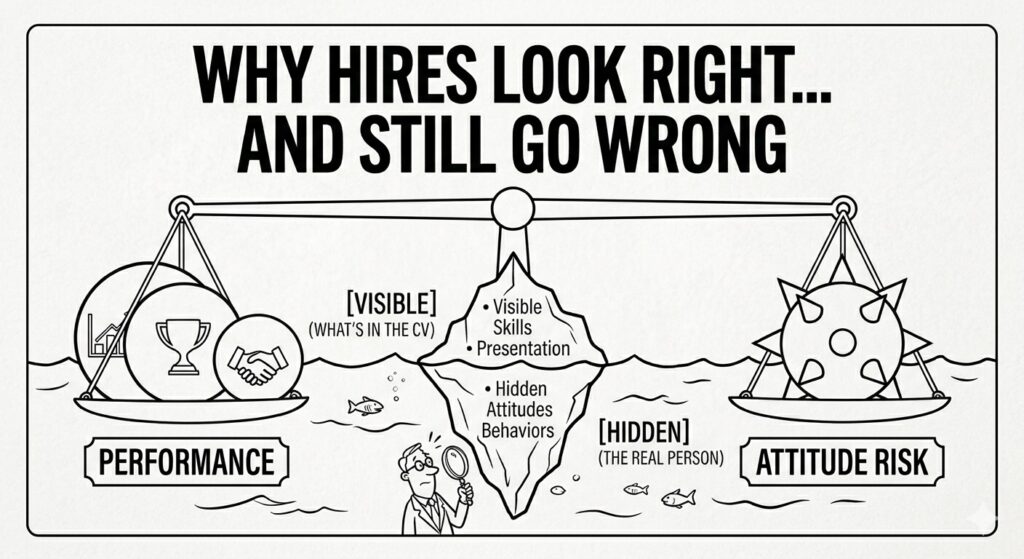
The reason is simple: most hiring processes are designed to assess performance, while overlooking risk. CVs and interviews show what someone has done and how they present themselves, but they don’t show how that person will behave day to day, or whether there are underlying risks that could impact the team.
This is where the idea of employee value becomes useful. Rather than looking at performance in isolation, it brings risk into the picture as well:
Employee Value = Performance – Attitude Risk
Strong performance only creates value when it isn’t offset by risk. Someone who looks capable on paper but brings reliability issues, conflict, or poor judgement can quickly reduce the value they deliver.
What drives that value often sits below the surface. Personality and ability shape how someone performs — how they behave, solve problems, and adapt — while attitude is where risk tends to sit. These are harder to see, which is why they are often picked up too late in the process.
A simple shift is to bring these elements earlier into hiring. Measuring personality, ability and attitude before interviews allows teams to prioritise candidates more effectively and avoid spending time on the wrong people. Interviews then become a way to validate decisions, rather than make them.
We’ve put together a short cheatsheet that breaks this down and shows how to apply it in practice.
[Download the cheatsheet]
About the Author: Nikky Van Bommel
 Nikky van Bommel is the Marketing Director for Big 5 Assessments and has worked in the Psychometric Testing industry for over 10 years. Nikky is responsible for all marketing and social media for the organisation.


